
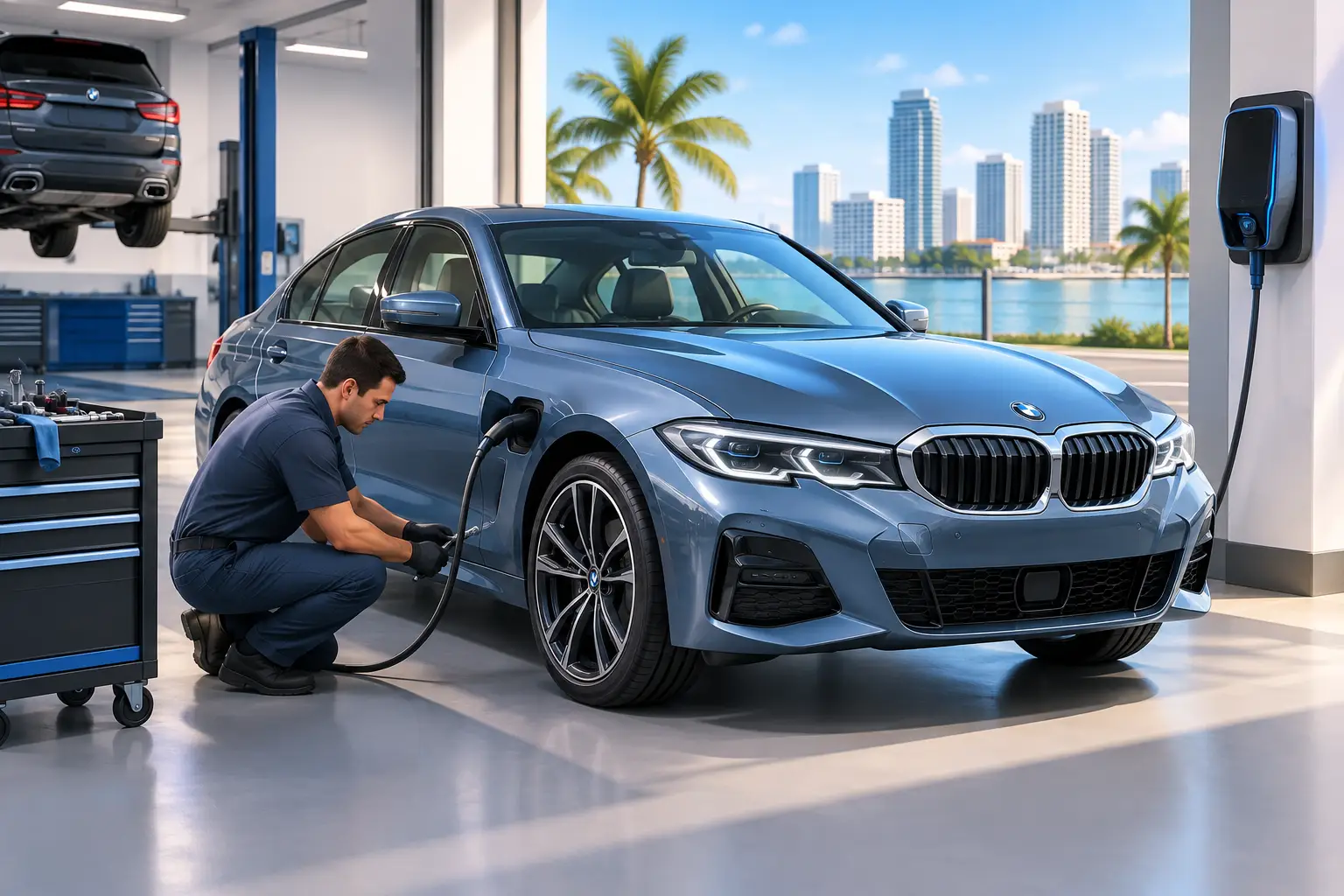
A BMW plug-in hybrid is not simply a gasoline BMW with a charging port. It is a precisely integrated vehicle with a combustion engine, high-voltage battery, electric drive components, power electronics, cooling circuits, control modules, and charging hardware working together. When one system is not communicating correctly, the symptom may be as subtle as reduced electric range or as immediate as a no-start condition. That is why BMW plug in hybrid service Tampa owners choose should begin with brand-specific diagnostic accuracy, not guesswork.
For drivers of the 330e, 530e, 745e, X3 xDrive30e, X5 xDrive45e or 50e, XM, and other BMW electrified models, proper service protects more than daily drivability. It helps preserve efficiency, performance, charging confidence, and the long-term value of a vehicle built around advanced engineering.
Why BMW Plug-In Hybrid Service Requires a Specialist
A conventional repair approach can overlook the relationship between the vehicle’s mechanical and electrical systems. A warning light that appears to involve the engine may be tied to battery thermal management, charging communication, a software calibration, or a fault stored in a module that generic scan equipment cannot access fully. Replacing parts before identifying the cause can be expensive and ineffective.
BMW plug-in hybrids also use high-voltage components that require correct safety procedures, proper isolation practices, and technicians trained to work around electrified systems. High-voltage cables, the battery pack, electric motor, inverter, and charging components are not areas for trial-and-error repair. The vehicle must be assessed with the correct equipment and handled with intention from check-in through final verification.
A BMW specialist can read BMW-specific fault data, evaluate live system values, test charging behavior, inspect associated mechanical components, and determine whether a concern is hardware, software, maintenance-related, or simply normal vehicle operation. That distinction matters. For example, reduced electric range may reflect temperature, driving habits, battery conditioning, or a genuine fault. The right answer depends on what the vehicle is actually reporting.
What Routine Plug-In Hybrid Maintenance Still Includes
Electric driving can reduce fuel use and brake wear, but it does not eliminate routine BMW maintenance. The gasoline engine still needs the correct oil service at the proper interval. Brake fluid, cabin filters, tires, suspension components, cooling systems, and conventional 12-volt battery health all remain essential to safe, reliable operation.
In fact, lower brake use can create its own concern in Florida’s humid climate. Brake rotors may develop corrosion when regenerative braking handles much of the vehicle’s deceleration. Regular inspection helps catch uneven pad wear, rotor condition, and caliper movement before a light braking issue becomes a more substantial repair.
Cooling-system service is equally important. Plug-in hybrid BMWs use carefully managed cooling circuits to maintain appropriate operating temperatures for the engine and electrified components. A coolant leak, degraded hose, weak pump, or thermostat issue should not be treated as a minor inconvenience. Thermal control directly affects vehicle performance and can influence how the hybrid system operates.
Tires deserve more attention than many owners expect. BMW plug-in hybrids are often heavier than comparable gasoline models because of their battery systems, and their immediate electric torque can accelerate tire wear. Maintaining correct tire pressures, alignment angles, and tire condition supports range, ride quality, braking performance, and the refined driving experience BMW owners expect.
Accurate Diagnostics for Charging and Hybrid Warnings
A charging concern may have several causes. The vehicle might not recognize the charge cable, may stop charging unexpectedly, may display a drivetrain or high-voltage warning, or may charge more slowly than expected. The fault could involve the vehicle, the cable, the charging station, the 12-volt battery, communication between modules, or a software issue.
The most efficient repair begins by documenting the exact condition. Does the concern occur at every charger or only at home? Does it happen with AC charging, after the vehicle has sat overnight, or after a recent software update? Is there a warning message, reduced-power condition, or change in electric range? Those details help direct the diagnostic process, but they do not replace testing.
At Fox Motors Bimmer Specialists, BMW-specific diagnostics are used to identify fault codes, module communication issues, charging data, system status, and the conditions that triggered the concern. From there, the technician can inspect the relevant hardware and determine the appropriate repair path. This is a more disciplined approach than clearing a warning and waiting to see whether it returns.
Some repairs are straightforward, such as a worn charging-port component, a weak 12-volt battery, or a cooling-system issue. Others may require module programming, software updates, wiring diagnosis, or a more detailed evaluation of the high-voltage system. A credible shop should explain what testing found, what repair is recommended, and why that recommendation is justified.
Software, Programming, and BMW System Communication
Modern BMW ownership includes software as part of vehicle maintenance. Plug-in hybrid modules exchange constant information related to battery state, charging, engine operation, climate control, regenerative braking, and driver displays. When software is outdated, incomplete after a repair, or improperly coded, the result can be warning messages, limited functions, or behavior that does not feel right.
Programming and coding are not cosmetic add-ons when they are needed to complete a repair. A replacement module may need to be configured to the vehicle. Battery registration, system resets, calibration procedures, and software updates can be necessary after certain repairs. Performing these steps correctly protects system communication and helps avoid repeat visits.
There is also a practical trade-off: not every software-related complaint calls for immediate programming. If the vehicle has a physical fault, an update alone will not repair it. Conversely, replacing a component without confirming software status can leave the original issue unresolved. The right process evaluates both sides before authorizing work.
Signs Your BMW Plug-In Hybrid Should Be Inspected
Do not wait for a complete failure if your BMW begins behaving differently. Changes in charging consistency, a noticeable drop in electric range, drivetrain warnings, unusual cooling fan operation, charging-port damage, fluid leaks, or a persistent check engine light all deserve professional attention.
Pay close attention if the vehicle will not enter electric mode when conditions normally allow it, if it starts the engine more often than expected, or if it reports reduced power. These symptoms do not automatically mean the high-voltage battery has failed. They do mean the vehicle should be scanned and evaluated by someone who understands BMW hybrid logic and component interactions.
A pre-purchase inspection is also wise when considering a used BMW plug-in hybrid. Beyond the normal inspection of brakes, suspension, tires, leaks, and engine condition, the vehicle’s charging operation, fault history, battery-related data, and module communication should be reviewed. The goal is not to create unnecessary concern. It is to give a buyer an accurate picture before committing to a sophisticated vehicle.
A Better Service Experience for Tampa BMW Owners
Premium vehicle service should be precise, but it should also be clear. Owners deserve transparent estimates, straightforward explanations, OEM-quality parts when appropriate, and recommendations based on the actual condition of the vehicle. They should not have to choose between dealership-level technical capability and respectful, personal service.
For a plug-in hybrid, convenience matters as well. A service visit should fit into a busy schedule without sacrificing diagnostic depth or workmanship. Complimentary loaner availability, flexible financing, careful communication, and warranty support can make a significant difference when a repair requires more than a basic maintenance appointment.
Whether your BMW needs scheduled maintenance, charging-system diagnosis, cooling-system repair, brake service, electrical troubleshooting, or module programming, address the concern while the symptoms are clear. A well-documented inspection today can protect the quiet electric miles, confident performance, and long-term reliability you bought your BMW to enjoy.