
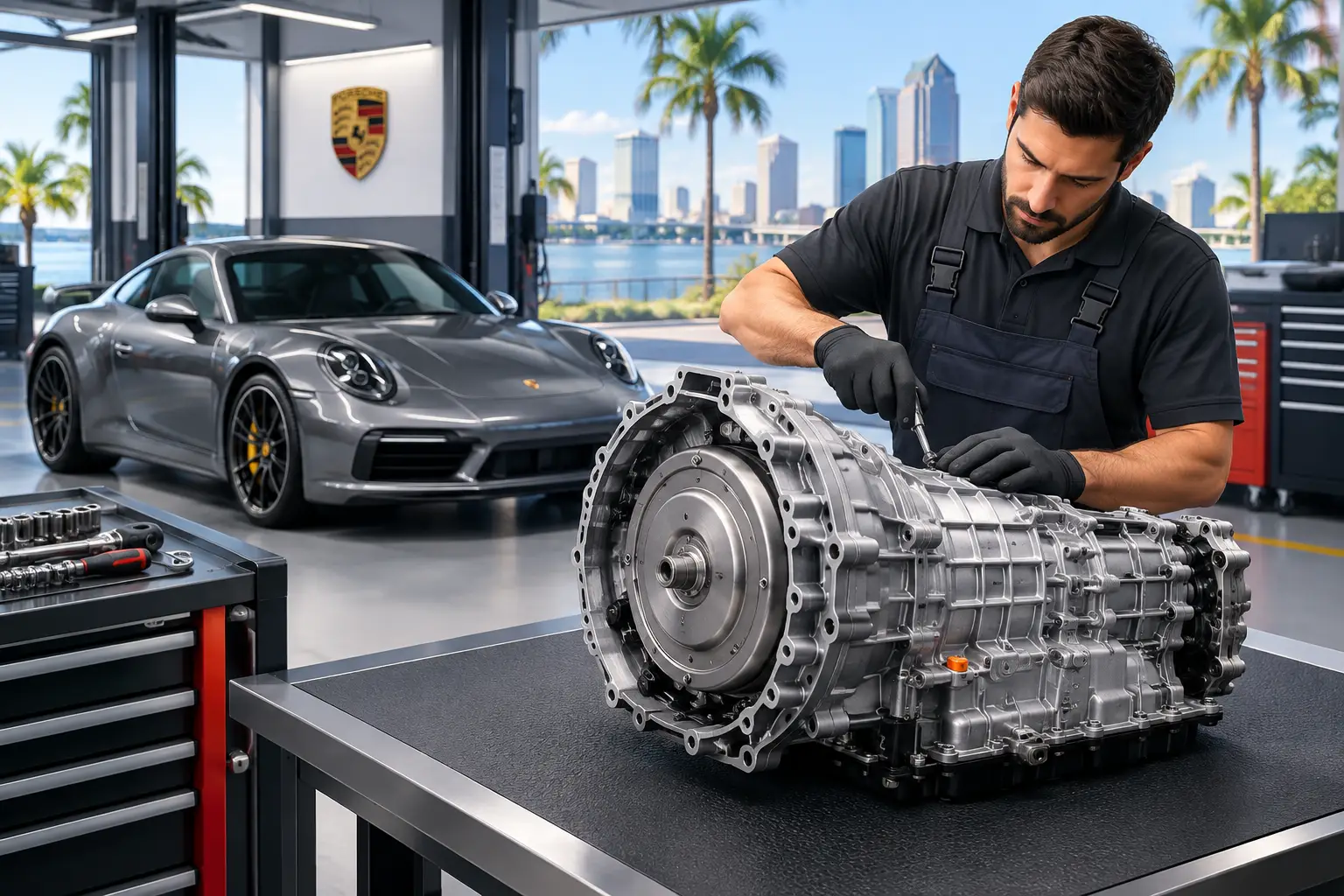
A Porsche transmission rarely fails without leaving evidence. The first clue may be a delayed engagement when shifting into Drive, a sharp shift after the vehicle warms up, a warning message, or a vibration that appears only under acceleration. Porsche transmission repair Tampa owners need is not a generic fluid-service appointment or a guess based on a dashboard light. It starts with accurate diagnosis of a sophisticated system built to manage substantial power with exact timing.
For a Porsche owner, transmission concerns deserve prompt attention, but not panic. Some symptoms stem from fluid condition, software calibration, mounts, sensors, driveline components, or a related engine issue rather than an internal transmission failure. The right repair process separates those possibilities before anyone recommends major work.
Why Porsche Transmission Diagnosis Must Be Precise
Modern Porsche transmissions are deeply integrated with the vehicle’s electronics, engine-management system, all-wheel-drive components, and driving modes. PDK dual-clutch transmissions, Tiptronic automatic transmissions, and manual gearboxes all require different diagnostic paths. A shop that treats every shifting concern as the same problem can replace expensive parts without correcting the cause.
PDK systems are especially responsive by design. A crisp shift in Sport or Sport Plus mode can be normal. A harsh, inconsistent, slipping, or delayed shift is different. The distinction matters because driving mode, transmission temperature, adaptive values, fault history, and current software all influence what the driver feels behind the wheel.
A proper evaluation begins with the owner’s description of the symptom. Does it occur cold, after highway driving, during low-speed parking maneuvers, or only under full throttle? Is there a warning light? Has the vehicle recently had battery, engine, suspension, or cooling-system work? Those details help narrow the diagnostic direction before the road test and scan process begin.
From there, a Porsche specialist should inspect fault codes and live data, verify fluid condition where applicable, evaluate leaks, and test the vehicle under the conditions that reproduce the concern. The goal is not simply to clear a code. It is to identify why it appeared and whether the condition is mechanical, hydraulic, electrical, electronic, or software-related.
Common Signs You May Need Porsche Transmission Repair in Tampa
Transmission symptoms can develop slowly, which makes them easy to rationalize. A slight hesitation may become more frequent. A small fluid leak may turn into low fluid level and accelerated internal wear. Addressing a concern early often provides more repair options than waiting until the vehicle enters reduced-power mode or no longer moves reliably.
Watch for a delay when selecting Drive or Reverse, rough or erratic shifts, slipping during acceleration, surging between gears, unusual whine or grinding, transmission overheating messages, or fluid beneath the vehicle. A burning odor should also be investigated quickly. Transmission fluid leaks are not always bright red, and the source may be difficult to identify without lifting and inspecting the vehicle correctly.
Some concerns feel like a transmission issue but are not. Worn engine or transmission mounts can create a pronounced bump during shifts. A failing driveshaft component, differential issue, wheel bearing, or axle can cause vibration that increases with speed. Misfires and throttle-control problems can create hesitation that feels like a shift fault. This is why diagnosis must look beyond the transmission assembly itself.
PDK Concerns Require Porsche-Specific Knowledge
Porsche Doppelkupplung, or PDK, uses two clutches to preselect the next gear for exceptionally quick shifts. Its performance benefits are substantial, but its control system is complex. Faults may involve clutch adaptation, mechatronic components, sensors, wiring, hydraulic pressure, fluid service history, or internal wear.
A PDK warning or drivability change does not automatically mean the entire transmission needs replacement. In some cases, programming, adaptation procedures, targeted component repair, or a correctly performed service may address the issue. In others, internal repair or replacement is the responsible recommendation. The answer depends on test results, not assumptions.
Tiptronic and Manual Transmission Issues
Tiptronic-equipped Porsche models can develop shift-quality concerns tied to fluid condition, valve-body operation, solenoids, electrical faults, or internal transmission wear. Proper fluid level procedures are temperature-sensitive, so a shortcut can create an inaccurate result. Using the correct fluid specification and following the manufacturer process protects shift quality and component life.
Manual Porsche transmissions have their own warning signs, including clutch slippage, difficult gear engagement, gear grinding, noise with the clutch engaged or released, and fluid leaks. A clutch issue, hydraulic problem, shifter linkage concern, or internal gearbox fault can produce similar complaints. Careful inspection prevents a clutch replacement from becoming an incomplete repair.
The Tampa Factor: Heat, Traffic, and Driving Conditions
Tampa Bay driving places different demands on a Porsche than highway-only use in a cooler climate. Stop-and-go traffic, high ambient temperatures, short trips, sudden afternoon storms, and intense summer heat can expose marginal cooling, fluid, battery, and electrical conditions. These factors do not mean Porsche transmissions are fragile. They do mean preventive maintenance and prompt diagnosis matter.
Heat is particularly relevant because it affects fluid performance and electronic components. A transmission that seems acceptable during a short morning trip may act differently after sitting in traffic with the air conditioning running. Documenting when a symptom happens gives the technician useful information and helps avoid the frustrating “could not duplicate” result.
Owners of Cayenne and Macan models should also remember that an all-wheel-drive drivability complaint may involve related driveline components. For 911, Boxster, Cayman, and Panamera owners, the vehicle configuration, transmission type, and service history shape the diagnostic approach. There is no one-size-fits-all Porsche repair plan.
What a Quality Repair Process Should Include
A premium vehicle deserves a repair plan with clear evidence behind it. Before approving Porsche transmission repair Tampa drivers should expect an explanation of the confirmed issue, the recommended repair, the alternatives when they exist, and the effect of delaying service.
Quality parts and correct installation matter as much as the initial diagnosis. OEM or OEM-quality components, proper seals and fasteners, correct fluid specifications, calibrated programming, and a final road test all contribute to a repair that performs as intended. A low initial estimate can become expensive if it excludes the supporting work required to complete the job correctly.
Transparency is equally important. An honest specialist will distinguish between an urgent condition, a developing concern, and a maintenance recommendation. Not every code requires immediate replacement. Not every noise can wait. The value is in clear advice that respects both the engineering of the vehicle and the owner’s budget.
At Fox Motors Bimmer Specialists, Porsche owners receive the same deliberate approach applied to every European luxury vehicle in the shop: specialist diagnostics, transparent estimates, respectful handling, and repairs intended to be done right the first time. Complimentary loaner availability, flexible financing, and warranty coverage on most repairs can also make an unexpected transmission concern easier to manage without compromising the quality of the work.
When to Schedule Service
If your Porsche is shifting differently than it did before, schedule an inspection before the symptom becomes severe. Avoid repeated hard acceleration to “test” a slipping transmission, and do not continue driving with an active transmission warning if the vehicle is entering limp mode, losing gears, or leaking fluid. Those conditions can escalate quickly.
Bring any service records and be prepared to describe the conditions under which the issue occurs. A short, specific note such as “hesitates shifting from second to third after 20 minutes in traffic” is more valuable than simply saying the transmission feels off.
Your Porsche was engineered for control, confidence, and precise response. When that response changes, a measured diagnosis and timely repair help preserve the driving experience you bought it for.